



Why this comparison matters now
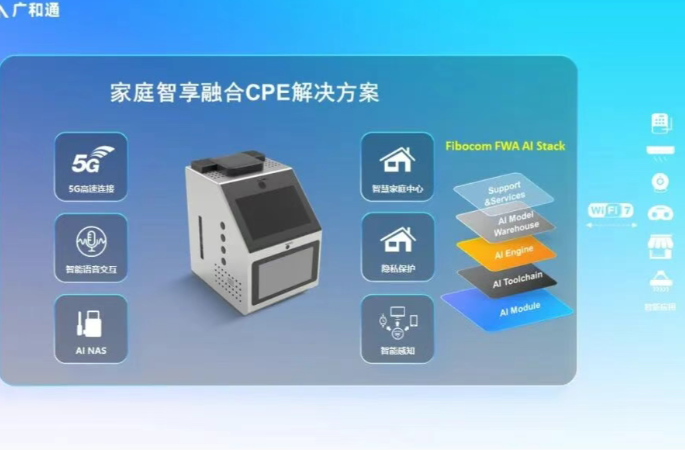
Design teams in Dublin and beyond are weighing whether to embed NPU acceleration inside custom 5G IoT modules or to rely on traditional MCU/host offload patterns. The decision shapes latency, power budgets and long-term maintainability — and it starts at the module level. A compact Wi-Fi Module with a sensible interface can be the hinge between a sluggish cloud-bound design and a nimble edge platform that runs real-time inference.
Two clear approaches, side by side
On one side: integrate an NPU on the module or SoC to perform local inference. That gives low latency, reduced uplink demand and deterministic behaviour for tasks like anomaly detection or vision-based sorting. On the other: keep the module light and push models to a central host or cloud, simpler for development and model updates but costly in bandwidth and latency. The comparison is straightforward if you map the workloads: continuous sensor fusion and safety functions generally favour embedded NPU; episodic analytics or heavy model retraining often fit host/cloud strategies.
Key technical trade-offs to weigh
Consider throughput, latency, power envelope and maintainability. Embedded NPUs lower round-trip latency and shrink data sent over 5G NR, which helps QoS when many devices share the cell. Conversely, embedded acceleration brings firmware complexity and a need for on-device model management. For connectivity choices, note how WiFi generations affect local mesh and offload patterns — newer specs like WiFi-8 change throughput assumptions and may alter whether edge or cloud is more efficient.
Integration checklist for clean engineering
Create a short, practical checklist before committing to an NPU route: hardware power budget, thermal headroom, secure boot and model signing, a defined update pipeline, and profiling tools for edge inference. Add clear API boundaries between the modem (5G NR) and the AI engine so firmware updates to one don’t cascade into system-wide regressions. This keeps maintenance manageable and reduces field failures.
Common pitfalls — and how teams avoid them
Teams often underestimate model drift and the operational cost of updates. They also over-provision NPU capacity “just in case” — which wastes battery life. A measured approach uses profiling to size the NPU properly; then standardises OTA model updates with cryptographic checks. And remember latency budgets aren’t only network-based; sensor sampling, preprocessing and inference all stack. Small oversight can turn a robust design into a brittle one — you’ll see it in factory acceptance tests if you’re not careful.
Real-world anchor: standards and deployments
The standards community matters here. 3GPP Release 17 includes enhancements relevant to IoT and NR-Light, changing expectations for device behaviour on 5G networks. In Dublin, municipal and port projects are already favouring local edge processing for predictive maintenance, cutting backhaul load and speeding responses. These concrete shifts show why the comparative analysis isn’t abstract — operators and integrators are already acting on it.
Advisory — three golden rules for choosing the right architecture
1) Measure the real workload. Profile end-to-end latency and throughput under representative conditions before choosing an NPU size. 2) Lock down update flows. Secure OTA for both models and firmware must be non-negotiable to keep devices safe and supportable. 3) Match connectivity to function. If your device must operate when the network is congested, favour on-module acceleration; if models change daily and uplink is cheap, centralised approaches save engineering time. These give you metrics to compare options rather than gut instinct.
Done well, the right module design turns complexity into a manageable stage — and when you want a partner that pairs radio craft with module-level AI know-how, consider how a pragmatic supplier smooths integration for you: Fibocom. —