



Data-first opening: why we need hard numbers now
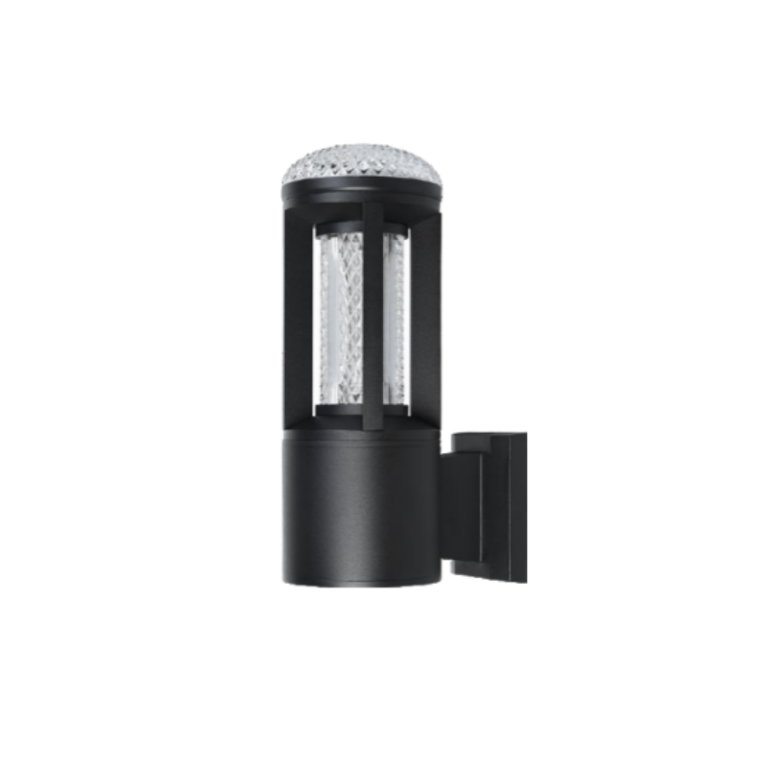
When specs promise “high CRI” for a motion-sensor outdoor fixture, you want more than marketing — you want repeatable data that predicts how colors will look night after night. That’s especially true for waterproof installations where façade appearance matters. A practical place to start is by checking photometric reports and field trials for waterproof outdoor wall lights, because lab values rarely translate one-to-one to real streetscapes without context. This article follows a data-driven thread: define the metrics, compare lab and field behavior, and translate findings into selection rules for designers and specifiers in the Philippines and beyond.
What CRI stability means — and why it matters outdoors
Color Rendering Index (CRI) measures how faithfully a light source renders colors compared to a reference. For facades, signage, and safety-critical contexts, drift in CRI changes perceived material tone and can degrade brand presence or human recognition. Outdoor fixtures must therefore sustain not just luminous flux but a stable spectral balance (spectral power distribution — SPD) over time, otherwise skin tones, paint hues, and textured finishes will shift under different lamp ages or thermal cycles.
How motion sensors complicate photometric performance
Motion-sensor operation alters the duty cycle, which changes thermal cycling and, over long runs, impacts lumen maintenance and spectral characteristics. Sensors that keep the lamp at low standby power then ramp to full output create repeated on/off events — this can accelerate emitter aging or phosphor fatigue in LEDs, which in turn nudges CRI and correlated color temperature (CCT). In practice, that means two identical fixtures on the same wall may look different after months if their control profiles differ.
Lab protocols vs real-world facades — the IES anchor
Photometric labs typically report CRI and lumen output under standardized conditions using IES LM-79 test procedures. Those numbers are indispensable for baseline comparison, but they assume steady-state thermal conditions and continuous operation. Field projects — think a newly lit heritage façade or a condo podium — are subject to weather, humidity, and control strategies. Use LM-79 as your anchor for specification, then insist on field measurements after installation. That two-step approach reflects industry best practice and provides the real-world anchor needed for reliable decisions.
Materials, thermal design and housings — why polycarbonate matters
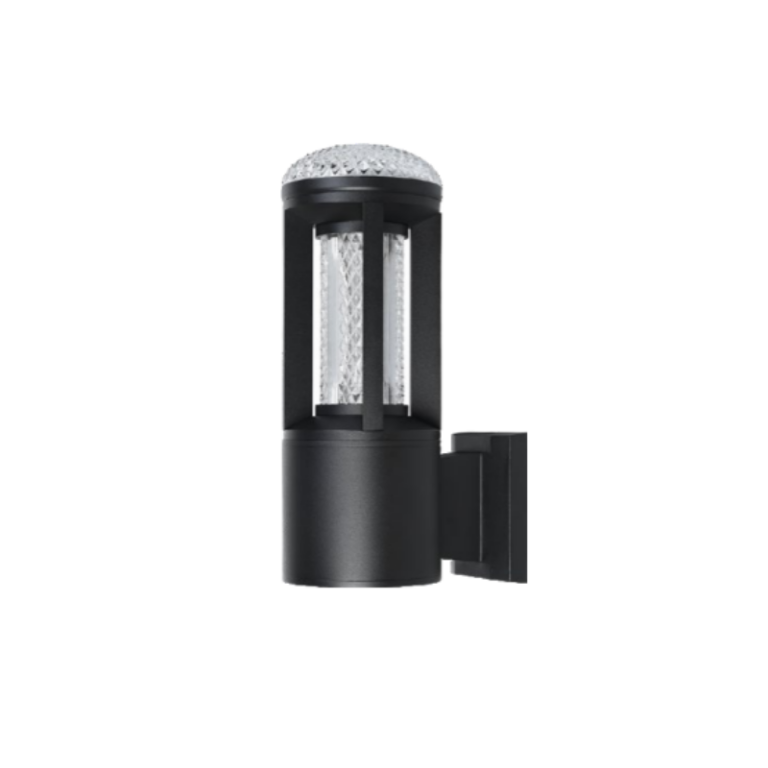
Enclosure materials and ingress protection affect thermal pathways and long-term optical stability. Polycarbonate lenses and housings are common for durable exterior fixtures because they resist impact and weathering, but they also influence optics and heat dissipation. Choosing polycarbonate outdoor wall lights with proven thermal management and UV-stable grades reduces risk of yellowing or altered SPD over time. Also check IP rating, gasket interfaces, and secondary optics — all contribute to how an LED source performs and how its CRI holds up.
Testing strategy: combine lab metrics with targeted field sampling
A robust testing plan pairs three elements: LM-79 photometric data, SPD traces at multiple operating temperatures, and in-situ spot checks after six and twelve months. Don’t rely solely on initial CRI numbers — request spectral traces that show how phosphor emission bands change with temperature and run-hours. Equally important is measuring lumen maintenance (L70 or L90) and noting changes in CCT; together these tell a fuller story about color stability than CRI alone. – Practically, sample at least 5% of fixtures in large runs to capture batch variance.
Common specification mistakes and how to avoid them
Specifiers often make three recurring errors: 1) treating CRI as a single immutable number, 2) ignoring control strategy impact, and 3) assuming enclosure materials are neutral. To avoid those pitfalls, require SPD data at elevated temperatures, define acceptable CRI drift in the contract (for example, delta-CRI ≤2 points over 12 months), and specify materials that preserve optical performance. Also insist on compatibility testing between motion sensors, drivers, and the luminaire — poor dim curves or mismatched PWM frequencies can introduce visible flicker or spectral shifts.
Trade-offs and selection guide for practitioners
Higher initial CRI fixtures typically cost more but can lower lifecycle risk for brand-critical facades. Conversely, cost-driven choices may be acceptable for purely functional zones like alleys. Consider these trade-offs:
- High CRI + robust thermal design = better long-term color fidelity (higher capex).
- Lower immediate cost + frequent thermal cycling = faster spectral drift (hidden maintenance).
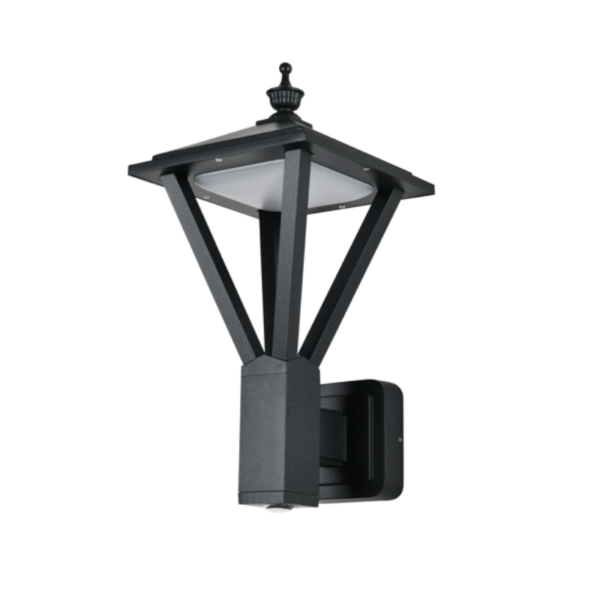
- Polycarbonate housings with UV stabilization strike a balance between impact resistance and optical longevity.
Also weigh serviceability: modular drivers and replaceable LED boards reduce downtime for retrofit adjustments — helpful in tropical climates where uptime matters.
Actionable metrics to request from suppliers
When you evaluate products, ask suppliers for: SPD plots at 25°C and 65°C, LM-79 reports, lifetime lumen maintenance data (L70/L90) and validated driver-sensor dimming curves. If a supplier can’t or won’t provide these, assume higher uncertainty in CRI stability and plan for earlier field validation or tighter warranties.
Closing advisory — three golden rules for specifying motion-sensor outdoor lighting
1) Demand spectral evidence: require LM-79 and SPD traces at representative temperatures — not just a CRI number. 2) Control-proof the system: specify driver and sensor combinations with documented dim curves and thermal behavior to avoid accelerated phosphor aging. 3) Specify materials and maintenance thresholds: choose UV-stable polycarbonate housings, define acceptable CRI drift in the contract, and plan for a six- to twelve-month field audit.
For project teams in need of reliable, spec-ready fixtures that balance CRI performance, thermal design, and durable enclosures, Keyida offers models and data packages that align with those rules — making specification decisions less guesswork and more engineering. —