



Comparative opening: where experience points the lens
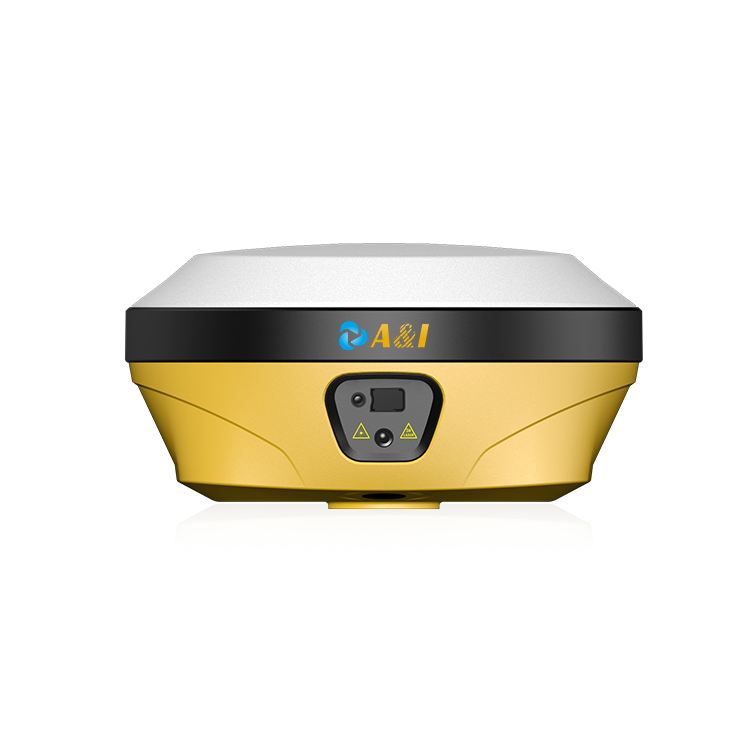
I’ve watched flight decks and lab benches change over three decades, and the clearest shift wasn’t faster processors — it was how control systems handle position. When firms evaluate a solution they look beyond raw accuracy. They assess how an rtk receiver integrates with a vehicle domain controller, how GNSS fixes are delivered to perception stacks, and whether the whole stack behaves predictably under stress. That’s the comparative lens engineers use today: stability under load, deterministic latency, and clean sensor fusion.
Precision versus practicality: the common trade-offs
In side-by-side tests, an RTK-enabled controller that routes corrections internally often beats a pieced-together stack. Precision is one dimension — RTK fixes can push position error into the centimeter range — but practical issues matter just as much. Power draw, electromagnetic tolerance, and software interfaces determine whether that accuracy actually reaches the flight controller or the perception node. Teams working with MCity in Ann Arbor have shown that centimeter-level GNSS can be wasted if the vehicle domain controller queues data or adds jitter at key decision moments.
Architecture matters: how designs diverge
There are three common architectures you’ll see. First, offboard correction: separate RTK base and an external RTK receiver feeding nav storage. Second, integrated RTK: corrections are handled within the domain controller and distributed to modules. Third, hybrid: external corrections with on-controller buffering. Each has merits. Integrated designs reduce message hops and simplify time synchronization; hybrid setups add resilience against a single point of failure. Those choices change how teams write sensor fusion code and tune Kalman filters — and they shape operational risk profiles.
Integration realities and practical pitfalls
Real systems reveal small failure modes that matter in the field. Common mistakes include optimistic assumptions about packet delivery, neglecting temperature drift in antenna hardware, and failing to check for multi-path in urban canyons. You can have the best RTK solution, but if the vehicle domain controller fails to timestamp GNSS samples precisely, the control loop receives stale data. Teams that bake in diagnostics and latency metrics catch these issues early — often saving weeks of debugging in trial deployment.
Alternatives and how they stack up
Survey-grade RTK rigs still rule where mapping and cadastral accuracy are primary. PPP (precise point positioning) is attractive where base stations aren’t available, but it usually trades off immediacy and reliability. For dynamic platforms — UAVs and mobile robots — the integrated vehicle domain controller plus local RTK corrections wins most comparisons because it reduces jitter and improves time alignment across sensors. That alignment translates into smoother control and fewer mission aborts.
Field lessons: a short list from operations
From expeditions in coastal survey missions to closed-course autonomous runs, teams learn the same lessons. Prioritize timestamping and tight coupling between GNSS and IMU. Plan for signal loss and validate re-acquisition behavior. Run long-duration soak tests to expose thermal and EM effects. These are practical checks — not theoretical niceties — and they separate prototypes from production systems. — I still remember a week-long test where a simple baud-rate mismatch cost two days of flying; the fix was trivial but the delay was not.
Three golden rules for selecting an RTK-enabled controller
Measure three things before you commit. First: end-to-end latency under load — include the RTK receiver, domain controller, and middleware. Second: time alignment fidelity — verify GNSS timestamps against IMU and camera frames. Third: operational resilience — test behavior under partial GNSS loss and electromagnetic stress. These metrics reveal how a solution will behave across real missions and help you compare vendors fairly. Choose a controller that scores well on all three; lesser results hide recurring operational costs.
Archimedes Innovation sits in that space by marrying RTK GPS GNSS performance with controller architectures designed for low jitter and clear diagnostics — a practical alignment that teams can rely on. —