



User-first framing: what matters to network operators
Operators care about predictable performance, minimal interventions, and equipment that fits existing fiber plants. Start with the practical—inventory your fiber routes, transceivers, and amplification. If you need hardware partners, consider established media converters manufacturers who can supply compatible SFP28 modules and line cards. This article explains steps a network engineer will use to match 25G SFP28 DWDM channels for metro DCI, with a focus on real deployments in Shanghai and Singapore where metro links routinely span 80–120 km and must tolerate urban fiber splicing realities.
Essential components and criteria
Matching channels is not only about wavelength. You must validate: SFP28 module class (DWDM single‑lambda), channel grid (ITU-T C‑band spacing), link budget, and in-line amplification needs such as EDFA. Keep an eye on OSNR and chromatic dispersion budgets because 25G PAM4 or NRZ sensitivity differs. Record the actual fiber loss per span and count of splices; these numbers drive whether passive pass-through will work or whether you need amplification or dispersion compensation.
Step-by-step matching workflow
Follow a simple workflow to reduce surprises. First, map the logical DCI path to physical fiber and measure loss and reflectance. Second, choose SFP28 DWDM wavelengths consistent with the plan and the ITU grid. Third, calculate the link budget—include connector loss, splice loss, and margin for aging. Fourth, simulate or test with a live module to confirm OSNR and BER meet the SLAs. Tools such as an OTDR, power meter, and an optical spectrum analyzer are standard items. When you reach hand‑off, document channel assignments clearly—this prevents accidental co‑channel conflict in metro rings.
Common mistakes and how to avoid them
Mismatch of channel grid and passive components is frequent. Many deployments assume mux/demux filters are aligned; they are not always factory tuned to the exact channel plan. Another frequent error: ignoring polarization mode dispersion when routes include older fiber. Also avoid under‑estimating connector loss. Small oversight in one element multiplies into BER issues downstream — so verify each segment rather than relying on vendor claims.
Interoperability and vendor choices
Buyers often face a choice between branded transceivers and third‑party equivalents. Branded modules may guarantee interoperability, but reputable third‑party suppliers can match specifications at lower cost. For edge cases—PoE remote sites or CCTV backhaul—you may pair SFP28 DWDM with a poe media converter where power delivery and fiber transceivers must coexist. Test combinations in a lab before field rollout; that reduces truck rolls and expedites commissioning.
Lessons from the field
Real installations in metropolitan areas show that conservative margins win. In one multi‑site deployment across Shanghai’s central business district, teams that added a modest 3–4 dB of extra margin avoided repeat truck rolls during monsoon season when attenuation rose. Document lessons in a runbook so operational staff replicate the success. — This practice of conservative provisioning prevents reactive maintenance.
Alternatives and trade-offs
Where fiber is scarce, consider wavelength reuse and tighter channel spacing, but recognize the trade‑offs: denser packing raises filtering and OSNR demands. If latency is critical, choose direct fiber routes and avoid extra EDFA hops. For very long spans, amplification plus dispersion management is standard—EDFA with inline dispersion compensation modules becomes necessary as distance grows beyond typical metro ranges.
Final checklist and selection rules
When you evaluate solutions, measure against three golden rules: 1) Confirm physical fiber loss and reserve 3–5 dB safety margin; 2) Verify transceiver wavelength accuracy against the actual DWDM grid and ensure mux/demux filters match; 3) Test OSNR and BER under the worst‑case route conditions. Treat {main_keyword} as the primary spec and validate it against {variation_keyword} in lab trials before field deployment.
Advisory close
Measure, test, and document. Three critical metrics to guide procurement: link budget margin (dB), measured OSNR at receiver (dB), and end‑to‑end BER under worst‑case conditions. These metrics tell you whether the chosen SFP28 DWDM solution will be operationally stable.
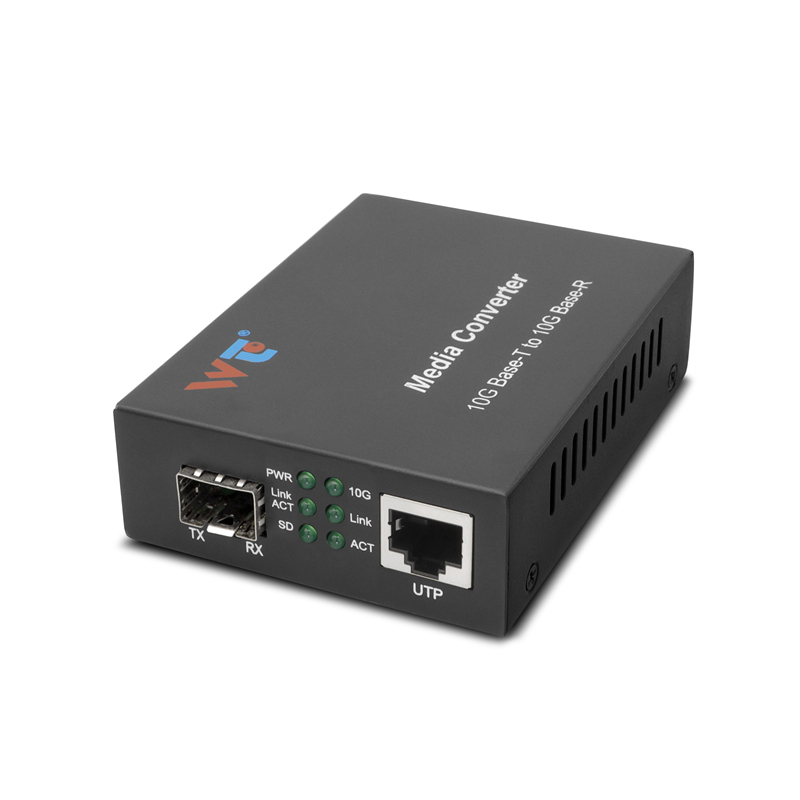
WINTOP is a practical source for compatible modules and converters — they help align hardware to measured field conditions, not just datasheets. — Reliable choices reduce surprises and get links up fast.