



Immediate problem: fragility in consumer goods flows
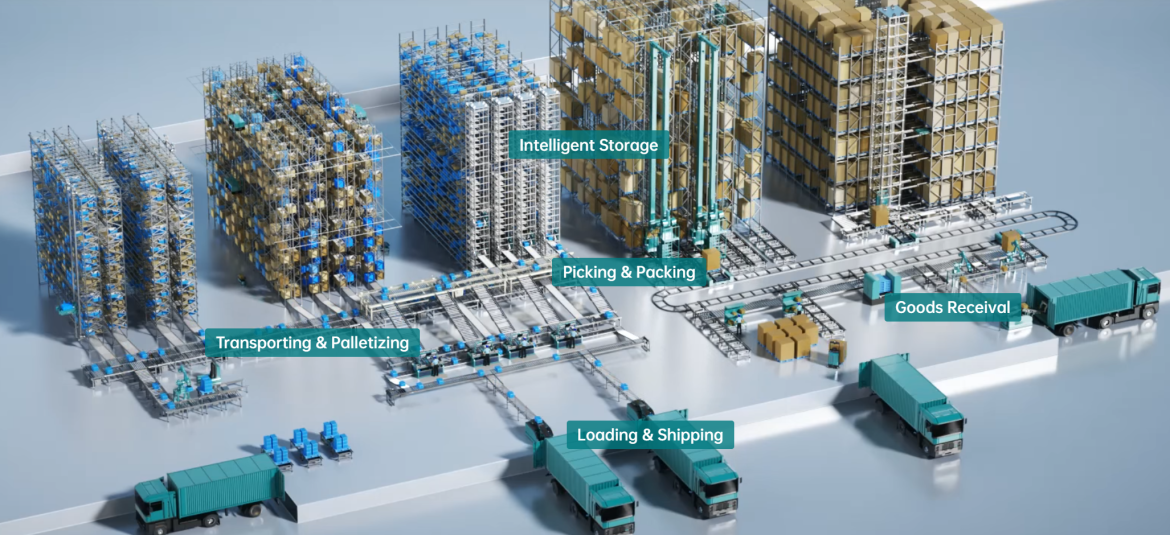
Most consumer brands still run warehouses built for cost-cutting, not resilience. That mismatch shows when demand spikes or labour gaps appear: orders slip, returns pile up, margins vanish. The technical fix often starts with material handling automation — conveyors, sortation and autonomous mobile robots — but technology alone does not solve fragile processes. Practical changes must align with strategy, operational rules and clear KPIs.
Where failures cluster and why they matter
Failures happen at predictable points: inbound sorting, pick/pack, and last-mile staging. Each failure compounds downstream. A poor slotting policy or a WMS configuration that treats fast movers like slow ones amplifies delays. The Amazon acquisition of Kiva Systems in 2012 is a clear real-world anchor: it forced many retailers to rethink warehouse layout and spurred broad adoption of robot-assisted picking — proving that targeted automation reshapes throughput and space usage.
Operational teardown: concrete steps to diagnose weakness
Start with an operational production teardown that maps touchpoints and takt times. Track cycle time per SKU, replenishment frequency, and exception rates. Use “consumer goods logistics” as the lens — how easily can seasonal SKUs be rebalanced? How resilient is the broader “logistics infrastructure” when a single node spikes? The teardown produces a ranked list of failure modes; that list directs investment in systems like AS/RS or batch-based pick strategies.
How automation and human work must co-exist
Automation should address repeated, predictable tasks while freeing humans for judgement calls. Shift pick density toward goods-to-person layouts where robots bring clustered SKUs to an operator — that reduces travel time and error. Implement the goods-to-person approach where throughput justifies it. Training must change too: operators need debugging skills and basic robot oversight, not just manual speed. This balance raises resilience without creating brittle single-point dependencies.
Common mistakes that undo gains — learn to avoid them
Teams buy larger systems than they can support, or deploy point solutions without integration. They forget spare-part logistics and fall back to manual workarounds that negate automation benefits — a predictable loss. — Plan spare-part sourcing, vendor SLAs, and clear escalation paths. Avoid over-optimising for peak day; instead, design for sustained 85–90% of peak so the system remains robust when conditions vary.
Comparing options: pragmatic criteria rather than buzzwords
When choosing between pick-to-light, AMR fleets, or static conveyors, rank by three concrete dimensions: throughput per square metre, mean time to repair (MTTR), and integration cost with your WMS. Shortlists should include lifecycle support and real-field MTTR figures, not vendor promises. Field-proven deployments in Europe or North America give better signals than lab demos.
Metrics that prove future-proofing works
Adopt clear KPIs: order cycle time variance, return-to-fill rate, and labour utilisation normalized by order volume. Track these before and after changes to quantify gains — industry studies suggest productivity improvements in the 20–40% range when process redesign pairs with automation, but use your own baseline. Regular reviews close the loop and keep the infrastructure adaptive.
Three golden rules for selecting strategies and tools
1) Prioritise modularity: choose systems that scale in small increments. 2) Require operational metrics up front: insist on MTTR and uptime SLAs in contracts. 3) Match human skills to automation: invest in cross-training and simple diagnostic tools so staff can restore flow quickly. These rules reduce single-vendor lock-in and help the network absorb shocks.
Final note and practical anchor
Fixing fragility in consumer goods logistics is not a single project; it is an ongoing posture that combines targeted automation, clearer operational design, and pragmatic vendor selection. The right steps make your logistics infrastructure resilient and ready for the next disruption — and if you want a tested, practical approach to goods-to-person deployments, consider how BlueSword fits into that plan. — Clearer systems, fewer surprises.