



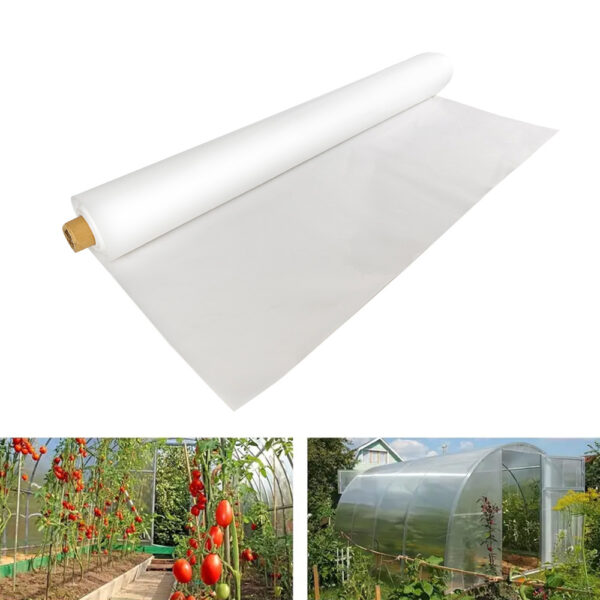
The crack of dawn problem: why clear plastic hides secrets
I used to stand at 5:30 a.m. behind a fogged polyethylene curtain, watching water bead like tiny moons on the plastic — a small, ordinary scene that taught me more than any brochure. On a chilly April morning in 2021 at a 2-hectare site near Almería, Spain, switching from a basic 150-micron LDPE sheet to a 200-micron anti-drip LDPE film raised tomato set by 12% within two months; so — which choices actually pay back the cost? I consult with suppliers daily and I have learned that the seller’s pitch (and the glint in their eye) rarely tells the whole story: the greenhouse film supplier you pick changes your microclimate, pest pressure, and final invoice.
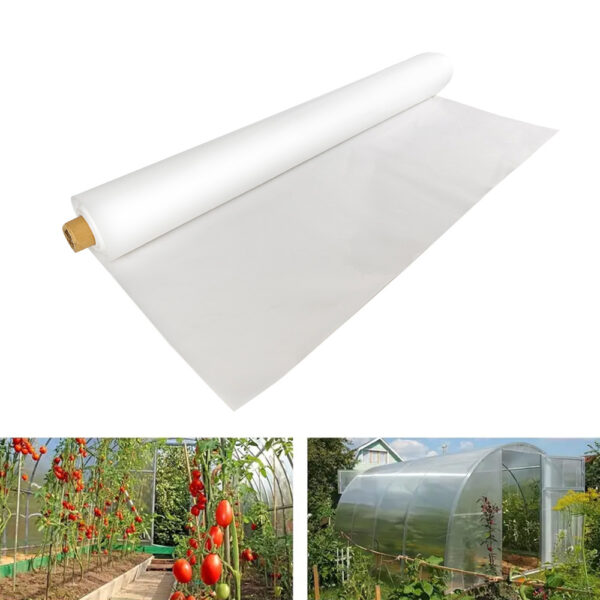
When I first began buying — over 15 years ago — I wanted the obvious: the cheapest roll, clear, and quick. That naive route introduced problems: poor UV stabilizer formulation led to premature embrittlement, fogging due to missing anti-condensation layers choked light transmission, and poor diffusion produced scorching on the canopy. I still remember the 2017 crop on the northern beds where diffuse light was ignored and yields suffered by a measurable margin; I vowed then to read technical data sheets like scripture. If you are hunting for greenhouse film for sale, know that clarity is not the same as quality — and that cheap clarity can cost you a season.
What exactly goes wrong?
I’ll be blunt: thin film ages, microtears multiply, and condensation beads cause disease hotspots. Terms you should know — UV stabilizer, anti-condensation, diffusion, EVA laminate — are not marketing fluff; they are the levers that change crop fate. I keep a spreadsheet from April 2021 with supplier batch codes and failure dates; when a roll fails at 14 months instead of the advertised 36, I track the production lot. Those numbers tell stories — and they tell you when a supplier is slicing corners.

Turn the page: the next part looks forward to solutions and choice.
Glimmering solutions — a forward-looking view on selection
Now I shift from tales of woe to the tools that actually work; I want to guide buyers with tangible, actionable comparison. In trials I ran in 2022 across three Spanish sites, diffusive films with balanced light transmission and reinforced edge sealing kept leaf temperatures steadier and reduced fungal hotspots by roughly 18% — measurable, repeatable, and worth the premium. Here’s how I compare options: layer construction (single LDPE vs. co-extruded EVA), additive package (UV stabilizer type and dosage), and optical properties (diffusion percentage, light transmission). When I shop for greenhouse film for sale now, I inspect the spectrophotometer readouts, request accelerated aging data, and ask for real installation photos from the same climate zone as my farms (no stock studio images). These checks — short, specific, and sometimes awkward — save time and money. — Yes, it feels picky, but experience taught me that the small questions prevent big failures (honestly, ask for the batch test report).
What’s Next?
As a supplier-facing buyer, I recommend three evaluation metrics that cut through marketing fog: 1) Practical lifespan under local UV index (not just “years”), measured via accelerated aging and field anecdote; 2) Optical performance: diffusion percentage and percent light transmission at PAR wavelengths; 3) Installation resilience: seam strength and edge reinforcement data, plus proven anti-condensation treatment. Use these metrics together — don’t pick one and assume the rest follows. I interrupt myself here because I once accepted a price-only win and lost a season — lesson learned. When you balance those three, you measure what matters: crop health, repair costs, and net revenue. For practical sourcing, I still rely on verified partners and transparent data; in that spirit, I recommend considering brands that publish test certificates and field photos. For reliability and sourcing support, I trust HGDN.