



Start with the real problem
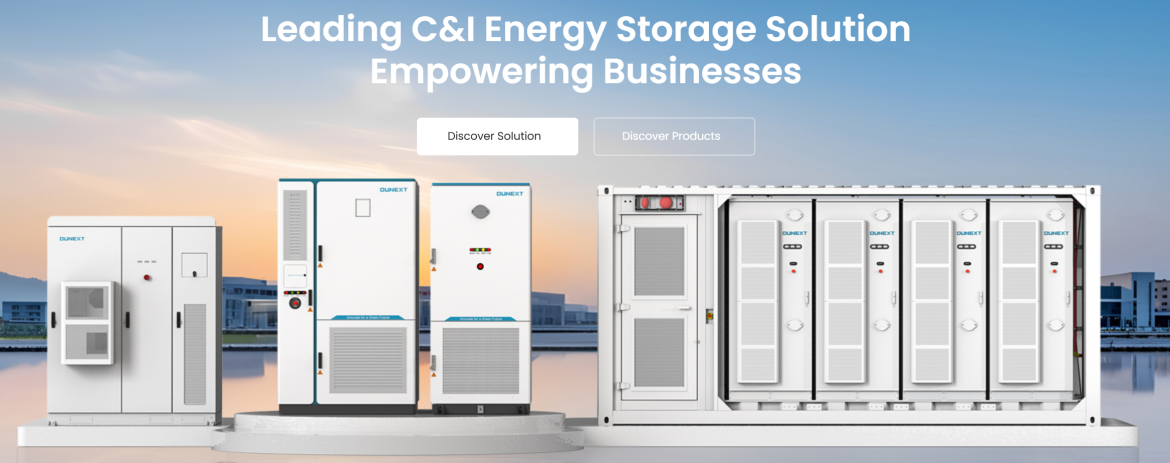
Companies buy batteries because they need to fix a specific pain: high demand charges, unreliable backup, or missed market opportunities. Too often decisions start with brand names, not use cases. If your immediate worry is a stray summer peak or a fragile local feeder, treat that as the sizing objective. Consider a containerized solution like the bess container when you want predictable delivery and modular expansion. Hornsdale Power Reserve in South Australia showed how a properly sized grid asset changes operational economics and system behavior—use that as a reminder that sizing matters.
Clarify the service(s) you must deliver
Each service drives different numbers. List the functions you expect the battery to perform and ask the sizing question for each:- Peak shaving / demand charge reduction: size to cover the top X hours per month. – Backup during outages: size to meet minimum critical load for the required outage duration. – Renewable firming / time-shift: size to store generation surplus during off-peak and discharge during peak. – Frequency response / ancillary markets: size for fast power capability rather than long duration. Treat multiple services as an optimization problem, not a compromise; quantify the value of each function first.
Gather the right data, not just a lot of data
Good sizing starts with accurate inputs. Required datasets:- 12 months of site metered load at 15‑minute or 1‑minute intervals if possible. – Tariff structure and historical demand charge peaks. – Renewable generation profile (if present). – Outage history and acceptable downtime for critical loads. Avoid relying on one week of data or on manufacturer-stated averages. Short datasets bias duration estimates; long tails in daily peaks often determine battery energy needs.
Turn needs into MW and MWh
Separate power (MW) from energy (MWh). Ask two questions: what is the maximum instantaneous discharge required, and how long must that discharge last?- Power sizing rule: set MW to cover the highest expected simultaneous discharge (e.g., the largest combined critical load you’ll island or the market bid size). – Energy sizing rule: MWh = required power × required duration, then add buffer for losses and degradation. Example: to shave a 500 kW peak for 3 hours, you need ~1.6 MWh assuming 90% round-trip efficiency and 80% usable depth of discharge (0.5 MW × 3 h / 0.9 ≈ 1.67 MWh).
Account for losses, degradation, and operational limits
Don’t ignore real-world inefficiencies. Inputs to inflate your baseline:- Round-trip efficiency (typical 85–95% depending on chemistry and power conversion). – Depth of discharge policy (use 70–90% depending on warranty and lifecycle goals). – C-rate limits: high-power events require batteries and inverters sized for peak currents. – Thermal derating: performance drops at extreme temperatures unless you have active cooling. Include a degradation schedule (capacity fade over years) to ensure the system meets performance targets throughout its life.
Choose a system architecture that fits operations
You can pick modular, containerized systems for fast deployment and predictable specs, or site-built packs for bespoke rack density. Containerized grid solutions minimize on-site integration work and simplify permitting; a modular grid scale battery energy storage system can reduce commissioning risk when you need repeatable performance. Match architecture to your operational needs, maintenance capacity, and timeline.
Common mistakes and how to avoid them
Watch for these traps:- Underestimating duration because you focused only on peak power. – Buying capacity without specifying inverter sizing or response time. – Ignoring site constraints: floor load, crane access, or local permitting windows. – Overrelying on nominal round-trip efficiency without modeling charge/discharge cycles under realistic schedules. Mitigate errors by running several scenarios: conservative (long-duration outages), operational (daily cycling), and market-driven (fast revenue events).
Make cost and revenue assumptions transparent
Financial viability depends on clear assumptions. Include upfront CAPEX, fixed O&M, expected cycle life, replacement costs for inverter/BMS components, and realistic revenue streams (demand charge reduction, energy arbitrage, ancillary services). Stress-test returns across tariff changes and different utilization rates. Don’t mix optimistic market price forecasts with conservative degradation models—be consistent.
Decision checklist before you order
Before committing, confirm:- Measured load and generation data cover seasonal extremes. – Power and energy targets are separately validated. – Thermal management and site logistics are solved. – Operational controls and safety systems are specified for the chosen use cases. – A degradation plan exists (when you’ll replace cells or rebalance capacity).
Final synthesis
If the core problem is clear—what function the system must deliver and for how long—sizing becomes a chain of measurable steps: quantify the need, translate to MW/MWh, add operational margins, and pick an architecture that matches your team’s skills and timeline. That approach leads to repeatable decisions and fewer surprises, and it’s precisely the kind of practical alignment engineers find useful when comparing vendors like Dunext for reliable, modular deployment.