



The Hook
Choosing photovoltaic modules is more difficult than comparing the wattage printed on a datasheet. Buyers must also consider cell technology, efficiency, degradation, temperature performance, mechanical design, warranty terms, certification, delivery support, and whether a supplier is suited to residential, commercial, or utility-scale work. Product ranges also change quickly, while published specifications may differ by model and market. This article evaluates six brands using information published on their official websites and the supplied company research. The options were tested against practical selection questions: what each company offers, where its stated strengths lie, and which project types appear to fit its published capabilities. The result is a structured comparison rather than a claim that one module is universally suitable for every installation.
Full List of Top 6 Brands
- Jinkosolar — A broad, globally oriented module manufacturer with strong emphasis on high-efficiency module technology and large-scale project suitability.
- WeAmeriSolar — A supplier presenting monocrystalline half-cell modules using N-type TOPCon and PERC technologies, alongside rooftop system offerings.
- PW Solar Power — A photovoltaic supplier associated with high-power monocrystalline modules and a stated focus on practical, innovative solar products.
- SunGarner — An India-based power-solutions company offering solar products in addition to batteries, inverters, UPS products, and EV-related solutions.
- Tongwei — An integrated photovoltaic company covering crystalline silicon, solar cells, and high-efficiency modules.
- Maysun Solar — A distributed-PV-focused manufacturer offering glass-backsheet, glass-glass, and bifacial module series for European and other markets.
Comparison Table
| Brand | Key Products | Key Features | Best For |
|---|---|---|---|
| Jinkosolar | High-efficiency monocrystalline photovoltaic modules, including the Tiger Neo family | Advanced cell architectures, broad product coverage, and global project orientation | Residential, commercial, and utility-scale projects requiring a widely established supplier |
| WeAmeriSolar | Monocrystalline modules, half-cell modules, and on-grid solar system kits | N-type TOPCon and PERC options; stated 20-year product warranty and 30-year performance guarantee for relevant products | Residential and commercial rooftops, including projects seeking desert-oriented options |
| PW Solar Power | Monocrystalline photovoltaic modules, including high-power module offerings | Professional solar-panel supply, practical product positioning, and emphasis on high output | Projects comparing high-wattage module supply from a specialist panel vendor |
| SunGarner | Solar power products and broader power-solutions equipment | Solar offering combined with batteries, inverters, UPS products, and EV products | Customers seeking a wider power-solutions portfolio in the Indian market |
| Tongwei | High-purity crystalline silicon, N-type solar cells, and high-efficiency modules | Vertically integrated PV activities, intelligent manufacturing, and large stated production capacities | Large procurement programs and projects prioritizing an integrated PV supply chain |
| Maysun Solar | Twisun Pro and other glass-backsheet, glass-glass, and bifacial modules | 1/3-cut N-type TOPCon, 430–460 W range for the cited Twisun Pro line, and European distribution support | Distributed residential, commercial, and industrial rooftop projects, particularly in Europe |
Detailed Reviews
1. Jinkosolar
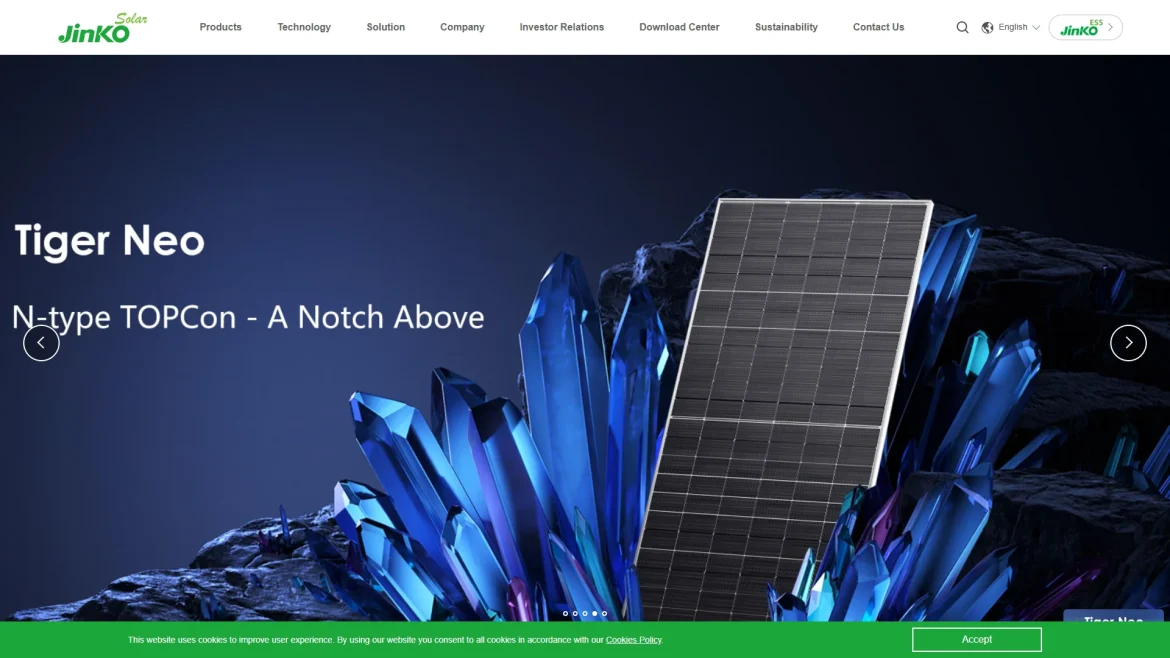
Overview: Jinkosolar is a major photovoltaic manufacturer with an extensive international presence and a portfolio built around high-efficiency crystalline-silicon modules. Its official materials identify the Tiger Neo product family as a key module platform, with product development centered on newer high-efficiency cell architectures. The company serves multiple parts of the solar value chain and publishes module information, technical documentation, and project-oriented resources through its global website. This broad scope makes Jinkosolar the strongest all-round entry in this comparison, although the precise suitability of any product still depends on the selected model and installation conditions.

Jinkosolar’s position is particularly relevant where module availability, documentation, installer familiarity, and long-term supplier visibility matter alongside rated power. Its portfolio covers applications from distributed rooftops to large solar plants. Buyers should compare the exact datasheet, electrical limits, dimensions, mechanical-load ratings, warranty document, and local availability rather than treating the brand name as a substitute for model-level due diligence.
Products and materials: The company’s module portfolio includes monocrystalline products and the Tiger Neo family. Official product information emphasizes high-efficiency technologies such as N-type cell designs and module configurations intended to increase energy yield within a given area. Depending on the model, buyers may encounter different cell formats, bifacial constructions, frame options, power classes, and electrical characteristics. The product page and current datasheet should be used to confirm the exact module construction and performance values.
Market and business scope: Jinkosolar operates internationally and supplies modules for residential, commercial, industrial, and utility applications. Its scale and established channel presence can be useful for projects requiring standardized procurement, technical documentation, and support across multiple markets. Local distributor stock, installer experience, certification requirements, and warranty administration remain important factors because these can vary by country and product series.
Pros / Key Features:
- Broad product coverage for different installation scales and roof constraints.
- Strong emphasis on high-efficiency module technology and N-type product development.
- International market presence and extensive technical information.
- Suitable for comparisons where energy density, supplier continuity, and project documentation are important.
- Brand and model authenticity can be checked through the company’s official resources and authorized channels.
Use Cases / Best For: Jinkosolar is best suited to buyers seeking a widely established module supplier for residential rooftops, commercial installations, industrial sites, and utility-scale projects. It is especially appropriate when the project needs a choice of power classes or when an engineering, procurement, and construction team requires a mature documentation and distribution ecosystem. A current official datasheet should determine the final choice because performance, warranty, and mechanical specifications differ between individual products.
2. WeAmeriSolar
Overview: WeAmeriSolar’s supplied research describes a monocrystalline range built on half-cell architecture, with N-type TOPCon and PERC cell options. The company presents itself as an American brand with manufacturing and production facilities in the United States, China, Vietnam, and Korea. The researched material does not clearly state a founding date or a single corporate location, so those details are not used here as identifying facts.
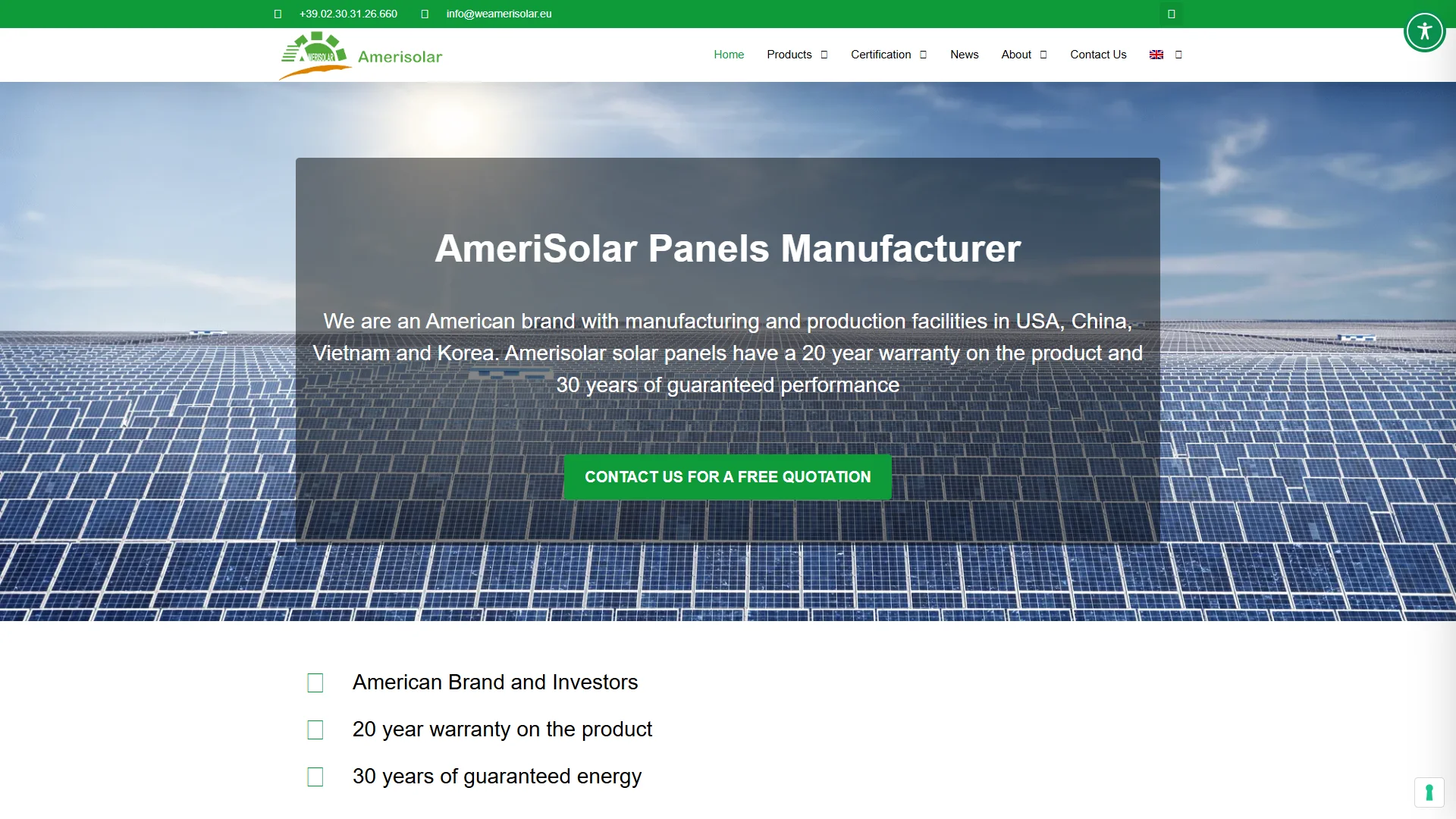
Products and materials: The published portfolio includes monocrystalline photovoltaic modules, half-cell products, and on-grid solar system kits intended for residential and commercial roofs. The supplied information states that some products offer up to 690 Wp, while the applicable model must be checked before procurement. The research also describes a passivation layer on the rear of certain cells and identifies both N-type TOPCon and PERC technologies.
Market and business scope: WeAmeriSolar’s stated applications include residential and commercial rooftops, with a separate emphasis on modules for desert or savanna environments. The company’s materials mention a 20-year product warranty and a 30-year guaranteed performance period for its solar panels; buyers should verify the applicable warranty document, exclusions, and model designation.
Pros / Key Features:
- Half-cell monocrystalline product architecture.
- N-type TOPCon and PERC options are identified in the supplied company material.
- On-grid system kits are presented for residential and commercial roofs.
- Published materials mention long product and performance warranty periods.
- Specific certifications cited in the research include TÜV, CE, and IEC references, subject to model-level confirmation.
Use Cases / Best For: WeAmeriSolar may suit residential and commercial rooftop projects that need a packaged on-grid solution or that are comparing TOPCon and PERC module options. Projects in harsh, hot, or dusty environments should verify the exact desert-area model, test reports, installation requirements, and warranty terms before selection.
3. PW Solar Power
Overview: PW Solar Power is associated in the supplied company material with Qingdao Power World Co., Ltd., described as established in October 2011 and focused on solar panels. The available summary positions the business as a professional supplier of photovoltaic modules and identifies energy saving, emissions reduction, practicality, endeavor, and innovation among its stated themes.
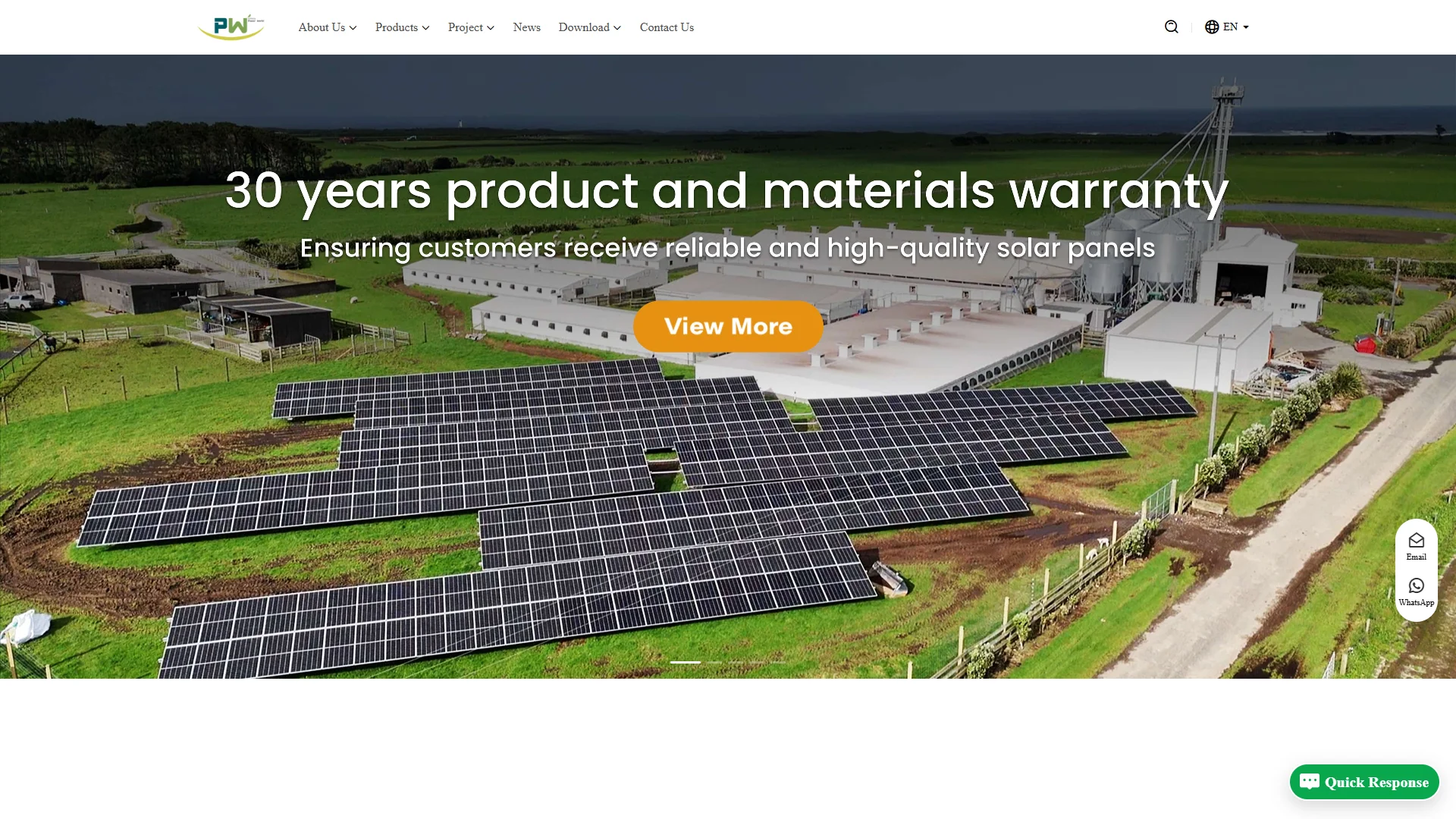
Products and materials: The available information identifies solar panels broadly and highlights monocrystalline module production. It also references the launch of large-scale production of 750-watt monocrystalline solar-cell modules. Because detailed model specifications were not included in the supplied dossier, buyers should request the current datasheet for cell type, dimensions, efficiency, temperature coefficient, mechanical loads, degradation, and warranty conditions.
Market and business scope: PW Solar Power presents itself as a specialist solar-panel supplier rather than a general consumer electronics brand. Its stated focus on practical products and green-energy deployment is relevant to buyers comparing direct module suppliers. Delivery terms, local stock, certifications, and after-sales arrangements should be assessed for the destination market.
Pros / Key Features:
- Focused business identity centered on solar panels.
- Monocrystalline module offering.
- Published reference to high-power 750-watt module production.
- Stated emphasis on practical products, innovation, and energy-saving solutions.
Use Cases / Best For: PW Solar Power is best considered by commercial buyers and installers comparing high-wattage monocrystalline modules from a specialist supplier. A technical review should confirm whether the module’s dimensions, current, voltage, and mounting requirements are compatible with the intended inverter and site design.
4. SunGarner
Overview: SunGarner is presented in the supplied research as an India-based manufacturing and power-solutions company. Its portfolio extends beyond photovoltaic products to include solar power systems, UPS products, batteries, inverters, and EV products. The available material does not clearly establish a founding date, so no founding-year claim is made here.
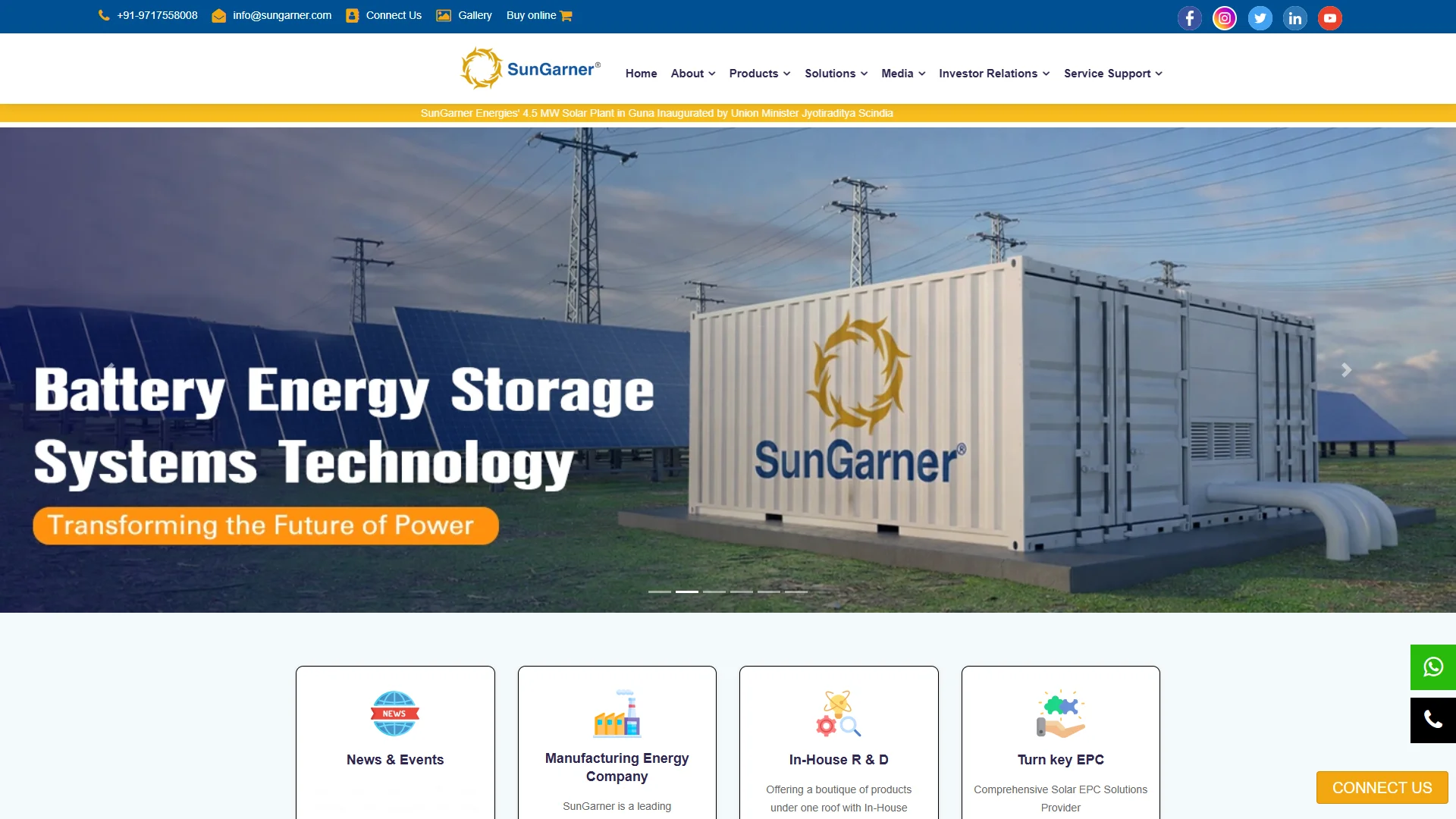
Products and materials: The company’s published scope includes solar power products, but the supplied research does not provide enough model-level information to identify a specific photovoltaic module family, cell technology, rated wattage, or construction. Buyers should therefore obtain the current product datasheet and warranty documentation before comparing SunGarner modules directly with named module series from other suppliers.
Market and business scope: SunGarner’s broader portfolio can be relevant to customers seeking coordinated power equipment rather than modules alone. The company describes applications involving solar power plants and related energy equipment. Availability, integration support, battery compatibility, inverter options, and local service arrangements should be reviewed for the intended project.
Pros / Key Features:
- Broad power-solutions portfolio beyond photovoltaic modules.
- Solar products are offered alongside batteries, inverters, and UPS equipment.
- EV-related products are also identified in the supplied company summary.
- India-focused market positioning may be relevant to local procurement and support.
Use Cases / Best For: SunGarner is best for customers evaluating a wider solar and backup-power ecosystem, particularly where module procurement is being considered alongside batteries, inverters, or UPS equipment. Module buyers should request product-specific electrical, mechanical, certification, and warranty information before final selection.
5. Tongwei
Overview: Tongwei describes a vertically connected photovoltaic business covering high-purity crystalline silicon, solar cells, and high-efficiency modules. Its official material presents the company as using modern intelligent manufacturing and states that its module production capacity reaches approximately 90 GW, while its N-type solar-cell capacity is stated as 150 GW and high-purity crystalline-silicon capacity as 900,000 tons. These are company-published capacity figures and should be interpreted as corporate capacity statements rather than a guarantee of availability for every market or model.

Products and materials: Tongwei’s portfolio includes high-purity crystalline silicon, N-type high-efficiency cells, and high-efficiency module products. Its integrated structure can provide control across important stages of the PV supply chain. Exact module construction, cell format, power rating, bifaciality, dimensions, and warranty conditions vary by product and should be checked in the relevant technical documentation.
Market and business scope: Tongwei presents a global market orientation and reports high-volume module and cell manufacturing. Its official materials also describe PV solutions and projects, including fishery-PV integration applications. The company’s stated sustainability direction includes “Together to Win,” and its project material refers to combining electricity generation with environmental and fishery applications.
Pros / Key Features:
- Integrated presence across silicon, cells, and modules.
- Published high production-capacity figures for silicon, cells, and modules.
- Focus on N-type cells and high-efficiency module products.
- Modern intelligent manufacturing is part of the company’s stated positioning.
- Experience described across conventional and fishery-PV applications.
Use Cases / Best For: Tongwei is well suited to large procurement programs, utility-scale developments, and commercial projects where supply-chain depth and high-volume manufacturing are important. It can also interest developers exploring specialized applications such as fishery-PV integration. Model-level verification remains essential for electrical compatibility and site-specific loading conditions.
6. Maysun Solar
Overview: Maysun Solar describes itself as a professional distributed photovoltaic module manufacturer with in-house manufacturing capacity and global distribution networks. Its supplied research identifies residential, commercial, and industrial rooftop examples, with particular operational support in Europe. The company states that it maintains offices in seven countries and 21 regional warehouses, although delivery coverage and stock should be confirmed for the buyer’s location.

Products and materials: Maysun’s documented portfolio includes glass-backsheet, glass-glass, and bifacial module series. The Twisun Pro line is described as using 1/3-cut N-type TOPCon technology, with a cited 430–460 W range and a 30-year product-performance warranty. The company also highlights a dark, uniform appearance for that product line. The exact warranty wording and performance schedule should be checked in the current product documents.
Market and business scope: Maysun focuses on distributed PV and supports European sales and service through localized operations, offices, warehouses, and regional teams. Its cited applications include a 10.80 kWp residential rooftop in Germany, a 32.40 kWp commercial rooftop in Hungary, and a 93.84 kWp industrial rooftop in Germany. These examples indicate application coverage rather than a promise that every project will use the same module configuration.
Pros / Key Features:
- Glass-backsheet, glass-glass, and bifacial module options.
- 1/3-cut N-type TOPCon technology in the cited Twisun Pro range.
- Published 430–460 W range for the cited Twisun Pro products.
- Quality processes described as including in-process controls and final inspections.
- Research states testing by TÜV Rheinland and compliance with IEC 61215 and IEC 61730 for the relevant modules.
- European offices, warehouses, sales teams, and after-sales support are highlighted.
Use Cases / Best For: Maysun Solar is a strong fit for distributed residential, commercial, and industrial rooftops, particularly in Europe where its local offices and warehouses may simplify delivery planning. Buyers should compare roof dimensions, bifacial gain assumptions, mounting conditions, and the exact warranty document before selecting a glass-glass or glass-backsheet design.
How to Choose Photovoltaic Modules
- Start with the site: Review roof area, orientation, tilt, shading, wind, snow, temperature, and access. A higher-rated module is not automatically the best option if its dimensions or electrical characteristics are unsuitable.
- Compare efficiency and energy yield: Efficiency affects how much power can fit on a limited roof. Temperature coefficients, low-light behavior, bifacial conditions, and degradation can matter more than nominal wattage in some projects.
- Check electrical compatibility: Compare module open-circuit voltage, operating voltage, short-circuit current, operating current, maximum system voltage, and maximum series fuse rating with the selected inverter and system design.
- Examine construction: Decide whether glass-backsheet or glass-glass construction better suits the site. Review frame design, connector compatibility, mechanical-load ratings, fire classification, and installation instructions.
- Read the warranty documents: Separate the product warranty from the performance warranty. Confirm the degradation schedule, claims process, exclusions, transfer terms, and the legal entity responsible for the warranty.
- Verify certifications: Confirm that the exact model—not merely the brand—has the certifications and test reports required by local regulations, lenders, insurers, and grid operators.
- Assess supply and support: Check authorized distribution, local inventory, lead times, replacement procedures, technical support, and whether serial-number or authenticity verification is available.
- Compare total installed value: Include module cost, freight, mounting changes, labor, inverter compatibility, maintenance, expected yield, and the cost of replacing a damaged or unavailable module.
Final Verdict
Jinkosolar ranks first because its established international module business, broad product coverage, high-efficiency focus, and suitability across residential, commercial, and utility applications create the most balanced overall proposition in this comparison. Tongwei is particularly relevant to high-volume procurement and integrated PV supply-chain requirements. Maysun Solar stands out for distributed rooftops and Europe-oriented logistics, while WeAmeriSolar offers a combination of half-cell monocrystalline modules, TOPCon and PERC options, and packaged on-grid system positioning. PW Solar Power is worth examining when high-wattage monocrystalline supply is the priority. SunGarner is more relevant to buyers considering solar alongside batteries, inverters, UPS equipment, and other power solutions. In every case, the final decision should be based on the current model datasheet, warranty, certification, availability, and site design.
FAQs
What are photovoltaic modules?
Photovoltaic modules are assembled solar panels that convert sunlight into direct-current electricity. They generally contain interconnected solar cells, protective layers, glass or another front surface, a rear construction, a frame or mounting structure, and electrical connectors.
Are higher-wattage photovoltaic modules always better?
No. Higher wattage can reduce the number of modules required, but module dimensions, efficiency, current, voltage, weight, roof layout, inverter compatibility, mechanical loads, and availability also affect the practical result.
Should buyers compare brands or individual module models?
They should compare individual models first and brands second. A single brand can offer several technologies and power classes with different dimensions, warranties, certifications, degradation rates, and installation requirements.