



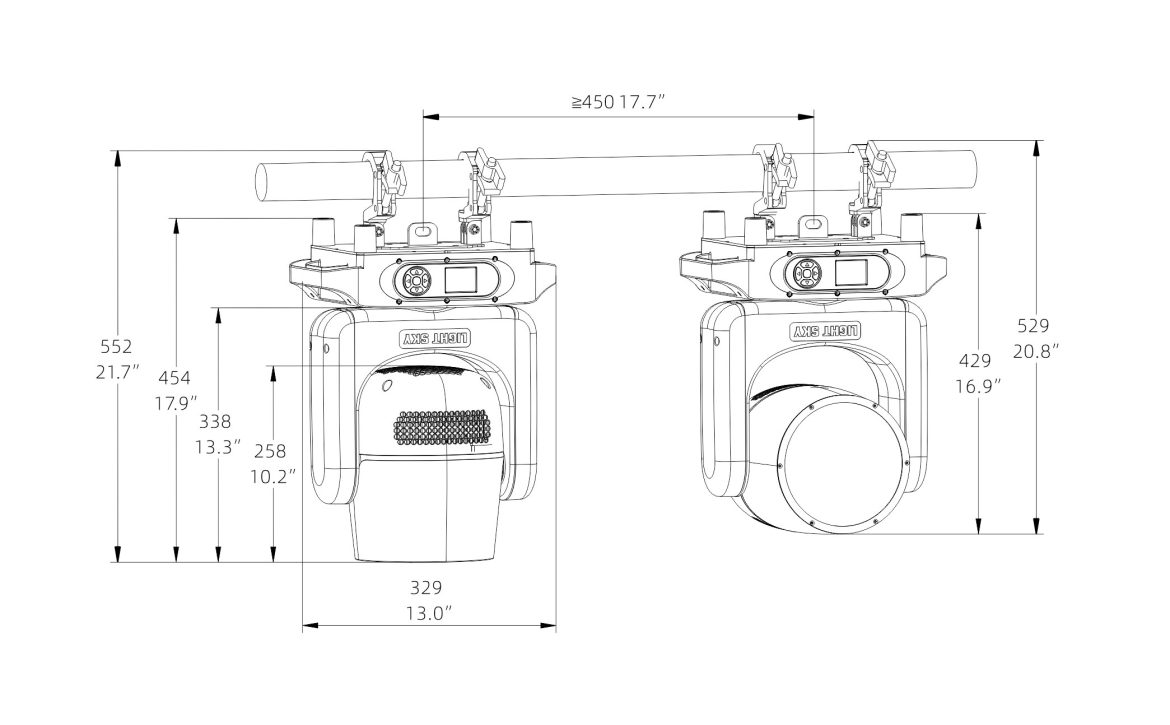
Comparative rationale and lead
The intent of this comparative analysis is to distill practical criteria for selecting compact laser and moving-head luminaires that satisfy precise lighting roles in small-to-medium venues. The examination begins with common device classes—laser fixtures, LED washes, and mini moving heads—while considering operational constraints such as control universality and installation footprint; for instance, an led moving wash often fills the role of broad field color with minimal rigging effort, whereas tighter-beam instruments play accent roles.

Scope, methodology and real-world anchor
This study compares devices across photometric, control, and mechanical dimensions using vendor specifications, published product manuals, and field observations from arena and theatre retrofits—examples of large-scale deployment that informed trade-off priorities (notably updates at several North American arenas). The method emphasizes measurable parameters: lumen output, beam angle, DMX512 integration, IP rating, and thermal management. Metrics were normalized to a consistent distance and mounting height to enable direct comparison.
Key performance dimensions
Three primary axes determine suitability for a compact fixture: photometric performance (lumen, beam angle, CRI), controllability (DMX512 universality, pixel mapping capability), and mechanical flexibility (pan/tilt range, weight, IP rating). Lumen output sets the visible intensity; beam angle defines the coverage and edge falloff; CRI indicates color fidelity when white balance or skin tones are critical. Control protocols and latency affect choreography and automated cues, making robust DMX512 or equivalent network support essential.
Form factor and deployment trade-offs
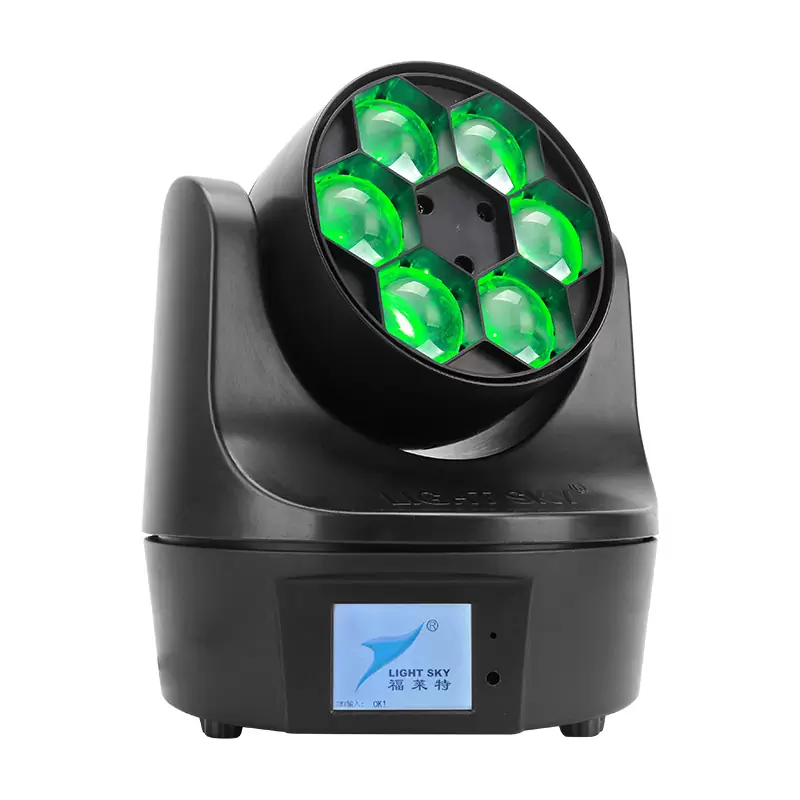
Comparative decisions hinge on the intended effect. Laser sources deliver high radiance in narrow beams with long throw, suited for aerial shafts and texture—low footprint, high visual impact. Mini moving heads combine a compact moving yoke, gobos, and variable beam shaping, offering more graphic versatility; see the industry example of a mini moving head light that balances output and mobility. LED moving washes sacrifice tight beam punch but provide color mixing and soft field coverage with high energy efficiency. Each choice trades specialization for versatility.
Common selection mistakes
Practitioners often emphasize peak lumen figures while underweighting mounting constraints and thermal derating. Overlooking beam angle relative to throw distance leads to either excessive spill or insufficient coverage—this is a recurrent procurement error. Another frequent oversight is neglecting protocol compatibility; fixtures that lack native DMX512 universality force protocol converters, which add latency and failure points. —A modest investment in documentation review prevents downstream retrofit costs.
Operational production teardown and integration notes
An operational teardown examines fixture assembly, serviceability, and cable management. Evaluate ingress protection seals, driver accessibility, and prefabricated mounting plates for rapid changeovers. During teardown analyses technicians should annotate where {main_keyword} and {variation_keyword} appear in wiring harnesses and control maps so maintenance cycles match production cadence. Pay attention to thermal pathways and fan-service intervals; these determine mean time between failures in continuous-run scenarios.
Comparative recommendations and cost-effectiveness
When assembling a rig, adopt a mixed-equipment topology: allocate lasers for aerial accents, mini moving heads for midstage dynamics, and LED moving washes for cyc and field washes. Prioritize fixtures with documented photometric files for previsualization, explicit DMX512 timing specifications, and service manuals that list driver voltage ranges and replacement part numbers. Where budget constrains choices, favor devices with modular optics or exchangeable gobos to extend lifetime utility.
Advisory close
Three golden rules guide rational selection: 1) match beam angle and lumen density to throw distance and architectural reflectance; 2) require documented control compatibility (DMX512 timing, latency figures) and accessible service intervals; 3) verify environmental suitability via explicit IP and thermal derating data, not just headline ratings. These metrics yield predictable performance and lower total cost of ownership. The value of rigorous comparative evaluation culminates in lighting solutions that perform reliably on cue—precisely the outcome offered by comprehensive suppliers such as Light Sky. —Final note: choose fixtures that make technical integration transparent, and operational confidence follows.