



The immediate problem at hand
Data centers and critical infrastructure are getting burned by downtime that used to be rare, and that’s pushed operators to hunt for better gear right quick. After Winter Storm Uri left millions of Texans shivering in the dark, facility engineers started treating alternators like first responders — not just spare parts. That shift puts a premium on things like a high efficiency alternator that won’t sag under repeated peak loads and can be monitored without guesswork. The real problem ain’t glamour; it’s predictable power, continuous runtime and fast recovery when a grid event hits.
Where legacy alternators break down
Older alternators were built for steady state, short-duration backups. In modern setups they face continuous transient loads, frequent start-stop cycles and harsher environments. Rotor and stator heating, bearing wear, and insulation degradation show up faster when you push units outside their intended duty cycle. Add aging plant wiring and mismatched controls, and you get repeated trips that look like random failures but are really predictable wear patterns. Load bank testing often reveals poor voltage regulation under sustained reactive loads — and that’s the hard lesson many operations learn too late.
What next-generation suppliers actually deliver
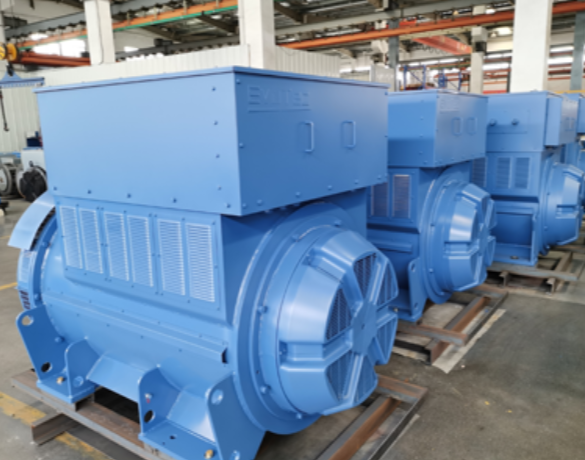
New suppliers bring design changes that matter on the floor: brushless topologies, better thermal paths, modular rectifiers, and integrated condition monitoring that ties to BMS and DCIM systems. They focus on longer mean time between failures and easier field swaps for rotors or rectifier packs. The end result is fewer forced outages and simpler maintenance rotations. For coastal or exposed sites, units marketed as waterproof alternator need to show real ingress resistance and corrosion mitigation — not just a sticker on the box.
Field lessons — mistakes I’ve seen more than once
Teams often skip two things that bite later: realistic endurance testing and spares planning. A unit might pass a factory warm test, but it’s the 72-hour continuous-load run and 4-hour 110% load bank sequence that reveals weakness in cooling or voltage regulation. Skimp on spares and you’ll wait weeks for a rotor or rectifier module while the data floor runs on emergency policies — that’s costly. Also, match alternator excitation and AVR curves to your genset controller; mismatches create hunting and heat, and no one likes chasing that at 3 a.m.
Practical deployment tips — keep it simple
Install with a clear maintenance loop: scheduled vibration checks, thermal scans, and trending of key parameters like RMS current and bearing temperature. Integrate alternator telemetry into your monitoring stack so analytics can flag rising insulation resistance or falling power factor early. Don’t forget mechanical considerations — rigid mounts, proper shaft alignment, and clean cooling paths cut failures down sharply. — It’s the small mechanical habits that pay dividends over years.
Three critical metrics to evaluate suppliers
1) Continuous rated output under site-specific duty: insist on documented performance curves for the exact load profile you’ll run, including transient response to 100–110% load and sustained reactive loads.
2) Field-proven reliability: request MTBF numbers plus two field deployment case studies (site, year, duty cycle) and follow-up data on service intervals and parts replaced.
3) On-site recovery and spares policy: require a service agreement detailing part swap timelines and a local parts cache. Specify load-bank acceptance testing parameters — for example, a 72-hour continuous run at nominal load plus a 4-hour 110% overload cycle — and make those part of the purchase.
Closing thoughts and how EvoTec fits
Pick suppliers who back their specs with measured tests and real-world deployments — that’s the difference between theory and uptime. When operators demand clear load curves, documented MTBF and a local spares plan, they get gear that behaves like it’s meant to keep the lights on. EvoTec shows up where those needs meet the shop floor, offering systems and service that answer the problem folks face every winter and after every storm.
Reliable power’s a responsibility — and that’s how you choose the right alternator.